

.png)
A fast no is better than a long and painful yes. Think DoorDash hours, not banker’s hours. Be a better alternative than a payday lender.
The most recent Bankrate Financial Outlook Survey painted a rather dire picture: the American consumer is not optimistic about their finances for the new year. In fact, for the first time since 2018, pessimism is at a record high, with 32% of adults expecting their finances to worsen in 2026.
Why this depressing outlook? As inflation strains the average household budget on everything from weekly grocery runs to necessary car repairs, and the job market remains stagnant, the American consumer doesn’t expect their finances to improve this coming year. As such, consumers are looking to ride out these waves with the financial institutions they trust.
For banks and credit unions, this shift in sentiment toward the economy means a change is also needed in their strategies for helping these consumers. Here is what the data tells us and how you can be smarter in how you fund deposits and loans as you start 2026.
1. The Money Mindset Shift: From Spending to Decreasing Debt
According to Bankrate, the #1 financial goal for 2026 is paying down debt (19% of all adults, rising to 25% among Baby Boomers). With credit card APRs averaging around 20%, consumers are looking to consolidate and refinance. What does this mean for your FI? Maintain pricing flexibility. Require higher yields to compensate for higher default risk rather than deny the application. You will still be a better alternative than a payday lender or a predatory used car dealer. Given this level of demand, you will also need to improve your campaign performance and identify which down-funnel metrics to track to gain a clear view of your marketing ROI.
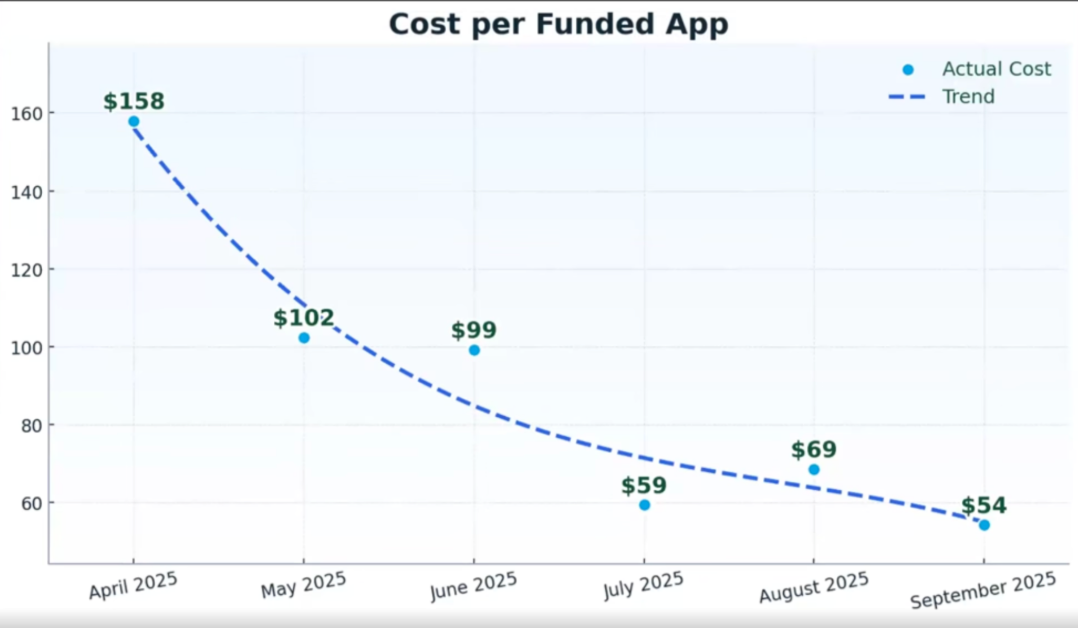
A tool such as AdSync tracks paid clicks through to funded loans, allowing you to optimize your ad spend for high-intent applicants ready to move from a high-interest card to your lower-interest personal loan or HELOC. On average, clients see a +90% increase in total funded applications while cutting cost per application by 40%. For CMO Kevin Dawson of Omni Financial, that meant saving 90k per month in ad spend while becoming the de facto lender for personal loans and mortgage refinancing.
Omni Financial Data
2. Providing Your Consumers a DoorDash-like Experience
Inflation (cited by 78% of pessimists as their top concern) has made consumers more protective of their time and money. If you are operating on traditional banking hours or have a digital application that is confusing or high-friction, a stressed-out consumer will abandon it immediately. You need to create your online branch with Amazon-like efficiency for the application experience and a DoorDash-like mentality for the hours when someone can contact you with questions.
A tool such as Optimizer identifies exactly where applicants drop off in your online application. By reducing funnel abandonment and removing application friction, you make it easier for people to access the financial tools they need. Also, remember that a fast no is always better than a long, painful yes. Get the prospect into the funnel immediately, and give them the answer in just as swift a timeframe.
Join us on January 14th to hear what happens when you do provide this DoorDash-like experience.

3. Be the Financial Institution Proving Value and Driving Growth
With 32% of Americans expecting their finances to worsen, financial institutions need to show up and prove their value. Attracting a high volume of low-quality applications creates a bottleneck for your underwriting team and increases your cost-per-funded-account, serving no one.
You must move beyond vanity metrics like "clicks" or “application completions" and focus on funded applications. Do you have a CEO/CFO enterprise quality ROI report? What metrics and data models do you use to get more efficiency from your budget? How are you benchmarking against your peers? Are you keeping your ad vendors honest with metrics that actually matter?
In 2026, transform marketing from a cost center to a profit driver through an ROI-driven marketing strategy. This starts with improved tracking, followed by data-driven decisions that result in continuous growth in funded deposits and loans without additional marketing spend.
4. A New Opportunity For Your Marketing
The Bankrate survey shows a stark generational divide: 46% of Gen Z expect their finances to improve, while only 25% of Baby Boomers feel the same. The data suggests two distinct marketing opportunity needs:
For Gen Z: Growth-oriented products and automated savings tools.
For Boomers/Gen X: Debt management and wealth preservation.
What this means for your FI is that you need to know which of your campaigns resonate with which demographic immediately. For example, making sure your messaging around "financial recovery" or "wealth building" reaches the right audience at the right time. Uplevel your strategy with machine learning, such as Alpharank’s behavioral intelligence, which is based on 6+ billion data points and maps the customer journey from the first click through to a funded account. This allows you to get the maximum bang for your marketing bucks, knowing exactly which ad results in which products funded application, and tying it back to the individual applicant.
Last Thoughts
Each month, Alpharank’s first-party benchmark data reports on financial product demand. November continued a negative three-month trend, and the benchmark data showed financial product approvals down 9% on average. The only growth was in approved credit card applications, likely seasonal as consumers prepared for holiday spending. As reported, the sharp contraction in approved deposits and home lending indicates increasing financial stress for the median consumer. These findings align with the Bankrate survey, suggesting that, in this environment, staying competitive requires more than vanity metrics when marketing your FI's deposit and loan products. That’s why, instead of blindly buying clicks, you need to adjust the incentives on Google and Meta so you pay only for the performance of funded applications. You need an ROI-driven strategy to get better click intent, journey efficiency, and campaign optimization. When you focus on these metrics, you can show up for your consumers in the way that they need. Remember, the American consumer demands convenience above all. You want only the information you need to make an account or loan decision. As we started this guide, a fast no is always better than a long and painful yes. And, what kind of experience do you want those in your community to have with your institution?
Book a call with Alpharank for a free evaluation of your paid media campaigns and an immediate 2026 improvement plan.